The Biblioteca Malatestiana
There is a place in Cesena where time has not been interrupted, only preserved.
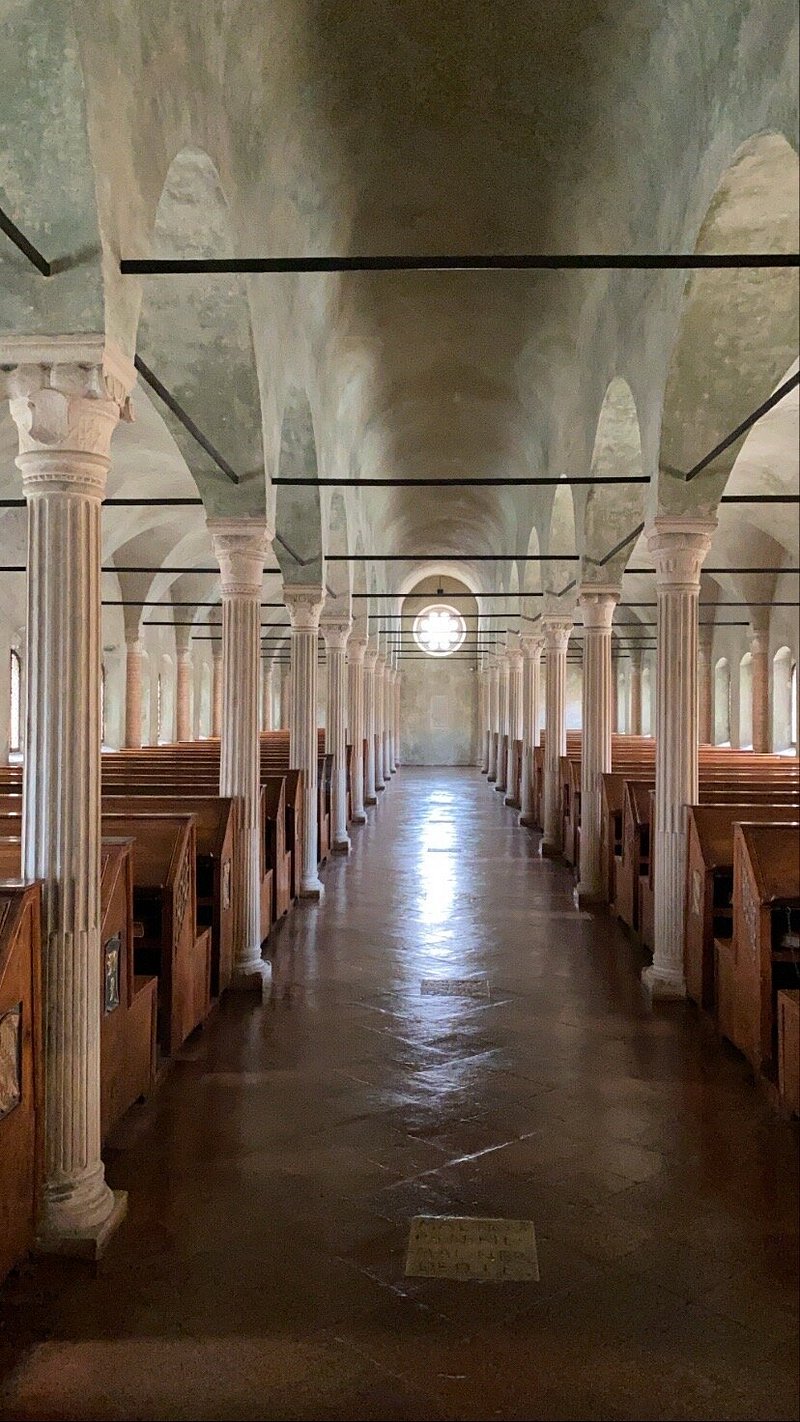
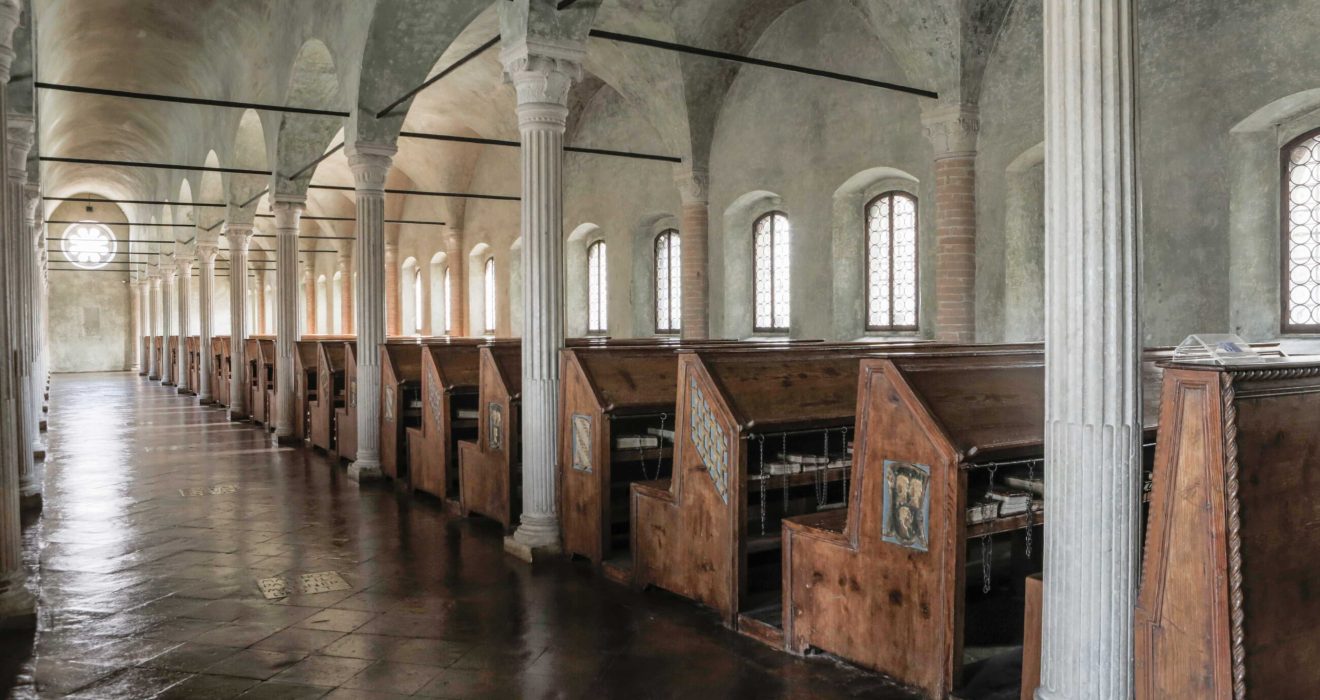
The Biblioteca Malatestiana is the oldest civic library in Europe. It has remained exactly as it was. Inside, you find wooden benches and manuscripts still chained to their desks. There is a quiet sense of continuity that feels almost untouched.
I did not know about this place until Monica mentioned it during our conversation in Rezdôra Stories. Her words shifted my understanding: she spoke about memory not as something abstract, but as something that lives in spaces, in what is kept, and in what is allowed to remain unchanged.
This perspective highlights exactly what makes the Malatestiana unusual.
Consider its history. The library passed through moments that erased much of what came before. In 1495, when the rule of the Malatesta family ended, many traces of their presence disappeared. The library did not. During the Napoleonic suppressions, when collections across Italy were broken apart, this one remained intact. Even through World War II, it survived without being altered.
Not because it was hidden. But because it was repeatedly recognised as something that should not be touched. There are no ghost legends here.
Nothing has been added to make it more dramatic.
What you encounter instead is something quieter, a presence that grows as you move through the space. This presence emerges from a complete system that has remained in place for centuries.
Each manuscript is still attached to its desk with an iron chain, part of the original structure designed in the 15th century. They are part of an idea of order in which knowledge had a fixed place, and movement was not casual.
Even the light follows the same logic.
The windows were positioned to guide readers throughout the day. This creates a rhythm that still exists.
Throughout, nothing has been rearranged to suit the present.
Nothing has been adapted to feel contemporary.
And yet, it does not feel distant.
Perhaps because it shows that continuity does not require reinvention.
Some things endure not by resisting time, but by being quietly carried through it, a living testament that the past can accompany us into the present—whole, intact, and quietly alive.
The Biblioteca Malatestiana is the oldest civic library in Europe. It has remained exactly as it was. Inside, you find wooden benches and manuscripts still chained to their desks. There is a quiet sense of continuity that feels almost untouched.
I did not know about this place until Monica mentioned it during our conversation in Rezdôra Stories. Her words shifted my understanding: she spoke about memory not as something abstract, but as something that lives in spaces, in what is kept, and in what is allowed to remain unchanged.
This perspective highlights exactly what makes the Malatestiana unusual.
Consider its history. The library passed through moments that erased much of what came before. In 1495, when the rule of the Malatesta family ended, many traces of their presence disappeared. The library did not. During the Napoleonic suppressions, when collections across Italy were broken apart, this one remained intact. Even through World War II, it survived without being altered.
Not because it was hidden. But because it was repeatedly recognised as something that should not be touched. There are no ghost legends here.
Nothing has been added to make it more dramatic.
What you encounter instead is something quieter, a presence that grows as you move through the space. This presence emerges from a complete system that has remained in place for centuries.
Each manuscript is still attached to its desk with an iron chain, part of the original structure designed in the 15th century. They are part of an idea of order in which knowledge had a fixed place, and movement was not casual.
Even the light follows the same logic.
The windows were positioned to guide readers throughout the day. This creates a rhythm that still exists.
Throughout, nothing has been rearranged to suit the present.
Nothing has been adapted to feel contemporary.
And yet, it does not feel distant.
Perhaps because it shows that continuity does not require reinvention.
Some things endure not by resisting time, but by being quietly carried through it, a living testament that the past can accompany us into the present—whole, intact, and quietly alive.